Document Guide
When a lender approves a mortgage, they need to have all the right documents in their file to support their decision. Lenders want to see proof of everything—no one’s taking anyone’s word for it these days. The specific documents you’ll need will depend on your financial situation, how you earn your income, and whether you’re a resident of Canada.

Here’s what you can expect to find below:
- What to do if you don’t have a scanner
- A list of the most common documents needed for mortgage approval
- Simple explanations of why each document is required
- Sample documents for reference
This guide is meant to keep things simple, help you stay on track, and get everything ready for your mortgage application.
No Scanner? No Problem
PDF is the standard format for submitting mortgage documents. If you don’t have a scanner, you can use your phone to take photos and convert them into PDFs. With an iphone- you can use the notes app. With an android you can scan with google drive, or just download an app.
One app that works well is Fast Scanner. It’s free and available on both Apple and Android, and it can handle single or multi-page documents.
When taking photos, a few quick tips:
- Turn on your flash for better lighting
- Lay the document flat and keep your fingers out of the shot
- Make sure the full document is visible (no cut-off edges)
- Take the photo straight on, not at an angle
- If your toes sneak into the photo, you’re still fine 🙂
As long as everything is clear and readable, you’re good to go. And if the app doesn’t work for you, JPG photos are totally fine too.

Forms of ID
Sample Driver’s License
This is the most common form of identification used to show your legal name and current address.
Sample PR Card
This document is used to prove Permanent Resident status in Canada for mortgage qualification.


Accepted ID
Combination of 2 Primary IDs, or 1 Primary and 1 Secondary ID
Primary ID (Must not be expired)
- Driver’s Licence or Learner’s Licence
- Services Card (with photo)
- Combination Driver’s Licence & Services Card
- Identification Card (Non-Driver)
- Canadian Birth Certificate
- Canadian Passport
- Permanent Resident Card (PRC)
Secondary ID (Must not be expired)
- Bank Card (Name & expiry required)
- Foreign Birth Certificate
- Canadian Forces ID
- Certificate of Indian Status
- Credit Card (Name & expiry required)
- Nexus Card
- Student Card (School ID)
- Social Insurance Card
Personal Income Docs – Employee
Letter of Employment (LOE) and paystubs are the essential paperwork we need if you are employed. These documents go hand in hand: the job letter shows Lenders the formal details of your position, while the paystub confirms your active earnings.


The Employment Letter is a standard requirement for all mortgage applications. It outlines your start date, position title, and guaranteed salary or hourly rate to ensure you meet the lender’s criteria.


The Paystub provides a recent breakdown of your earnings. It acts as a cross-reference to the employment letter to confirm your year-to-date income and tax deductions.
Personal Income Docs – Self Employed
If you’re self-employed (but not a corporation), there are two routes we can go: stated income via 6 or 12 months bank statements, or by using your last 2 years of T1s. It’s often a stack of paperwork, but we know exactly what we’re looking for inside it.

For Bank Statements, you need to provide us with 12 months of PDF statements downloaded directly from your online banking. This helps lenders verify the consistent cash flow of your business over time.

For T1s, please get these from your tax software or your tax professional. Make sure it is the full version that includes all the schedules and pages to ensure the lender has the complete breakdown.
Income Tax Docs

T4 – Employment Income Form If your income fluctuates due to multiple income sources or you earn overtime or shift premiums, the T4 shows your total income from that specific employer for that specific tax year.

T4A/T5 – Retirement & Other Income If you earn income other than salary (such as commission or pension), this form documents your details for that specific source for that specific tax year.

Notice of Assessment (NOA) The NOA is issued by the CRA as confirmation of your taxable income and whether there is money owing to the CRA or not.
T1 General If you are self-employed or have multiple sources of income, the T1 General provides a breakdown of all your gross and net earnings.
Other Sources of Income
If you regularly receive payments from Canada Child Benefit (CCB), Pensions (private or CPP), disability (this could be private, like from Canada Life, Veterans, or CPP), rental income, investment income (we’ll need T5’s for this – see the tax section) spousal or child support or other sources, submit statements for these as well. Earnings from other sources of income may impact how much mortgage you can afford in the eyes of a lender.
In almost every case for these other types of income, lenders will want to see three months of bank statements showing these funds being deposited into a bank account via bank statements that show your name & account number (this proves ownership of the account).

Canada Child Benefit (CCB)
Submit a recent statement from the “Mail” section of the Canada Revenue Agency (CRA) confirming the amounts you receive.
We can only use CCB for kids that are under the age of 15. We will also need proof of the kids’ ages via birth certificates or services cards.

Child or Spousal Support
A separation agreement is a must if there are minors involved. This document will need to be signed by all parties and dated.
The lenders will also look for a history of at least 3 months of payments via bank statements, and we are required to use the amounts found in the separation agreement.

Disability
This can be in the form of Veterans Affairs, CPP, Provincial or even Private—as long as your letter says it is “Permanent” or “Pension”.
You’ll need to provide documentation that confirms the amount and duration of your LTD benefits. This could include official statements from your insurer or your LTD policy outlining the monthly payments you receive.

CPP and OAS
For Canada Pension Plan & Old Age Security, we require recent payment statements or tax slips as well as official letters from Service Canada confirming the amount of your monthly or annual CPP/OAS income.
Down Payment Docs
Proper Bank Statements are ESSENTIAL.
As previously mentioned, we need 3 months of bank statements for your down payment account (and sometimes to prove other forms of income) and if you’ve transferred money between accounts or made any large deposits, then we will need statements for those accounts as well to show the source of the transferred funds. It may feel like a lot of paperwork, but these need to be very specific due to AML rules.

Statement Essentials
Ensure your document clearly shows:
- Your name. The statement must have your name so we can verify account ownership.
- The date range that the statement covers.
- The account number.
- NO REDACTED INFORMATION. No really. Please don’t do it. We honestly don’t care if you’re subscribing to OnlyFans, or if you visit the beer store every day, I promise.

Gifted Down Payment
Most lenders will accept gifted down payment. There are some restrictions, so check with your broker.
This is a sample of what a gift letter would look like. Please keep in mind that each lender has their own template, so please wait for your broker to send you the correct one.
Property Docs
Sample Property Tax Statement
The property tax statement is issued annually by your municipality as a notice of what your property taxes for that year will be.


Sample Mortgage Statement
Outlines remaining balance, payments, and interest. If you own a property already, this is paperwork you can’t skip.

Alternative Forms of Credit
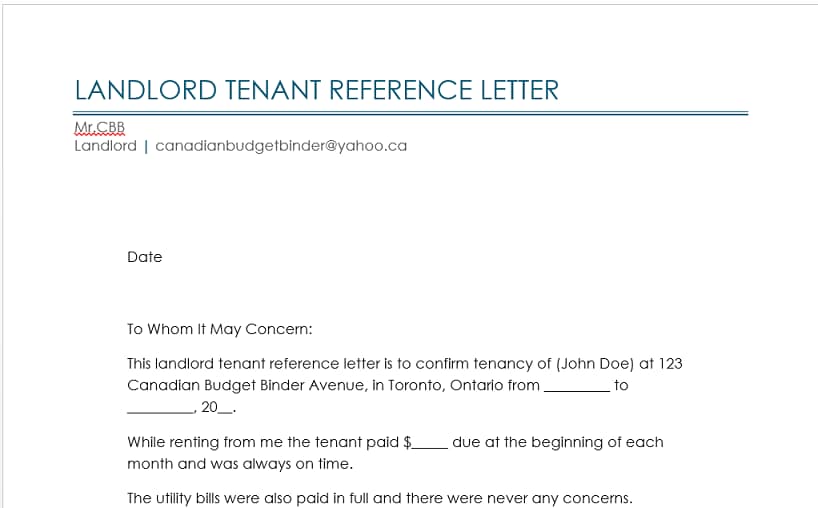
If you don’t have much established credit, Lenders look for proof of regular payments on a significant financial responsibility.
A preferred form is a “rent” or “landlord letter” because a monthly rent payment is usually similar to a mortgage payment.