How Much Down Payment Do You Need? 5 Expert Tips to Plan Wisely
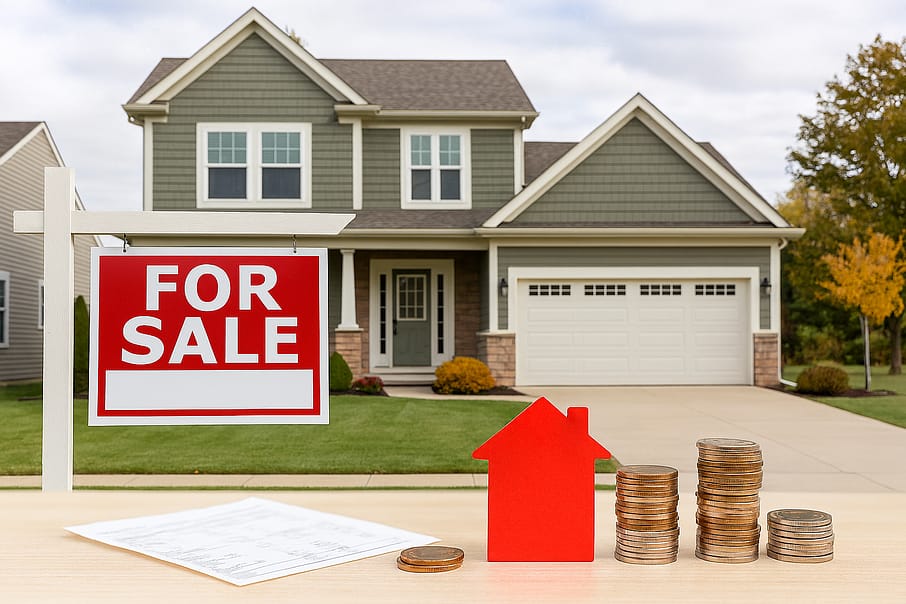
Buying a home is exciting, but one of the first questions most Canadians ask is: how much down payment do I need? Your down payment affects the type of mortgage you qualify for, whether you need mortgage insurance, and your monthly payments. This guide breaks it all down for 2026 so you can plan confidently.
Minimum Down Payment Rules in Canada
The Canada Mortgage and Housing Corporation (CMHC) and other mortgage insurers set clear rules:
Keep in mind, if your down payment is less than 20%, you’ll need mortgage insurance through CMHC, Sagen, or Canada Guaranty.
How Down Payment Affects Your Mortgage
Your down payment directly impacts your mortgage principal, which in turn affects your monthly payments and total interest paid.
- Higher down payment = lower mortgage balance: This leads to smaller monthly payments and less interest over the life of the loan.
- Lower down payment (<20%): Default insurance premiums apply, which are added to the mortgage and slightly increase your monthly costs.
On a $600,000 home, your minimum down payment isn’t a flat 5%. It is $35,000 (5% of the first $500k + 10% of the remaining $100k). Putting this minimum down requires CMHC insurance. In contrast, a 20% down payment ($120,000) avoids insurance entirely, saving you thousands in premiums and significantly reducing your monthly payment.
5 Expert Strategies for Your Down Payment
- Automate & Harvest: Set up a dedicated savings account. If you get a tax return, move it there immediately!
- Leverage Government Programs: Use the FHSA for tax-free growth and the RRSP Home Buyers’ Plan (which now allows you to withdraw up to $60,000). Pro Tip: RRSP funds must be on deposit for at least 90 days before you use them!
- The Debt Math: If your credit card interest is higher than what you’re earning in savings, pay off the debt first. It frees up more monthly cash for your future mortgage.
- Check First-Time Programs: Don’t forget to look at local first-time buyer incentives.
- Side Income Reality: While side hustles are great for saving, lenders usually won’t let us use that income to qualify you for a bigger loan unless you have 2 years of consistent tax history showing that extra income.
Down Payment and Lender Options
Many buyers don’t realize that how much you put down affects which lenders you can access and the interest rates they offer. A default insured mortgage gives the lender security, and that security often gives you a better interest rate.
- 5–19.99% down: Must be an insured mortgage. Includes a default insurance premium but often comes with the lowest available interest rates.
- 20%+ down: Eligible for uninsured mortgages. You have access to more lenders and more flexibility (like 30-year amortizations), though rates may be slightly higher.
- High-value homes (>$1.5M): Require a full 20% down, as no insurance is available.
Additional Costs to Consider
Your down payment isn’t the only upfront cost! Planning for these avoids surprises at closing:
- Closing costs: Legal fees and Land Transfer Tax (depending on your province).
- Due Diligence: Home inspections and appraisals.
- Settling In: Property insurance, utility hookups, and moving expenses.
🚨 Important: The 90-Day Rule for Moving Money
Do not move large sums of money between accounts in the 3–4 months before applying. Lenders track deposits and transfers closely. If you move $1,000+, you will have to provide 3 months of bank statements for EVERY. SINGLE. ACCOUNT. that money touched. Keep your funds stable and provide clear documentation of where the money came from!